


Professional photography services to prove damage and reconstruct scenes are carried out with specialised professional tools, including advanced cameras and recording devices from leading manufacturers, and drones.
This service is accepted both in complex criminal cases, for analysing crime scenes and shooting cases and road accidents, and in civil cases such as insurance claims, accidents and negligence, construction defects, fires, as support for proving relationships and measurements, and more… A scene reconstruction film, including aerial footage from drones, is often used to analyse the scene and arrive at the truth.
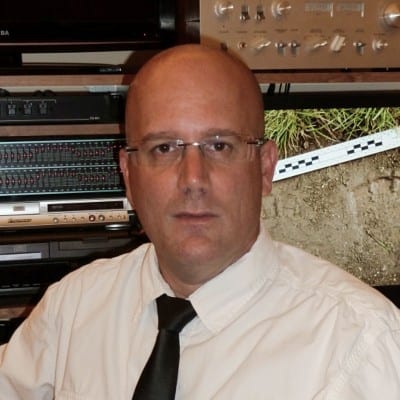
Doron Baldinger is an expert in digital evidence and in presenting it accessibly in legal proceedings, and a producer in the field of media and photography. A drone operator holding a commercial UAV pilot licence issued by the Civil Aviation Authority of Israel (CAAI).
Over 20 years of experience.
Expert witness in the courts.
For an initial, no-obligation phone consultation, call 054-421-2424 or send a WhatsApp message.
The work process:
First, we carry out an initial analysis of the existing documentation of the scene, whether from security cameras or scene photographs, including police forensic photographs and/or those of a police traffic accident investigator, and the like. We then analyse the full sequence of events at the scene, as we have also learned it from the body of evidence in the investigation file, including the various documents in the file, such as memoranda, seizure and marking reports, scene visit reports, viewing reports by police experts, statements taken from various witnesses at the scene, and testimony given in open interviews by those involved who gave their version.
After studying the scene from all the relevant data arising from the body of evidence, we go out to the scene to carry out an on-site reconstruction. The reconstruction is documented as required for the matter, whether by photography, by recordings or by aerial footage from drones.
In this way, points in dispute can be clarified, and/or the layout of the scene and the professional analysis of the body of evidence can be made more accessible, through the many photographs and videos produced and submitted as appendices to the expert opinion, as part of the expert’s work file and as an integral part of the opinion.
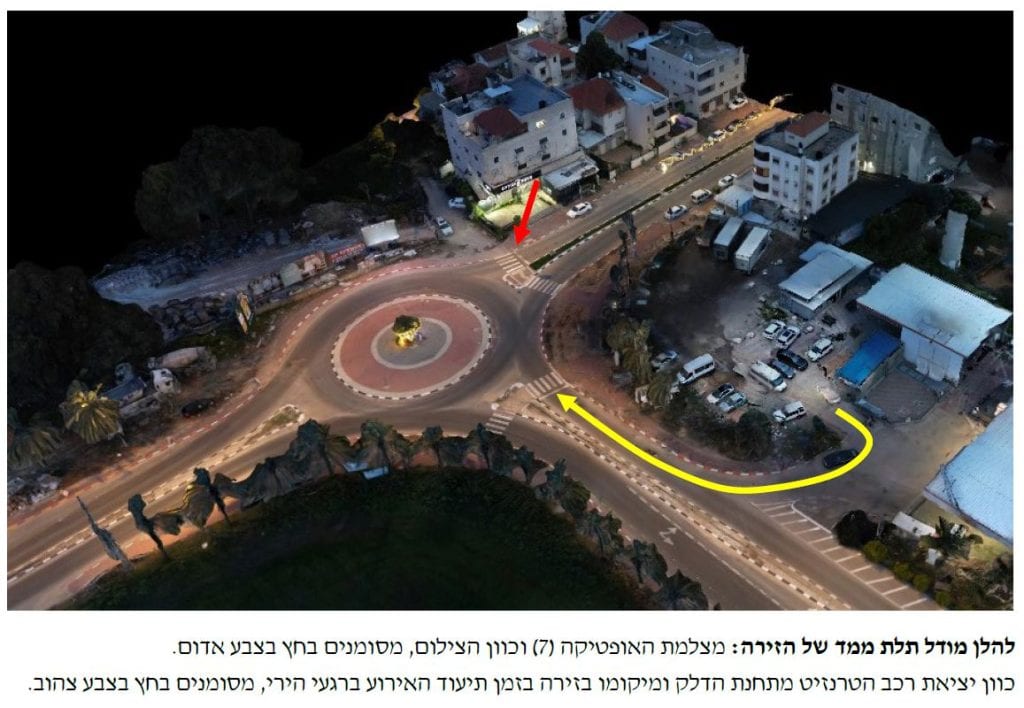
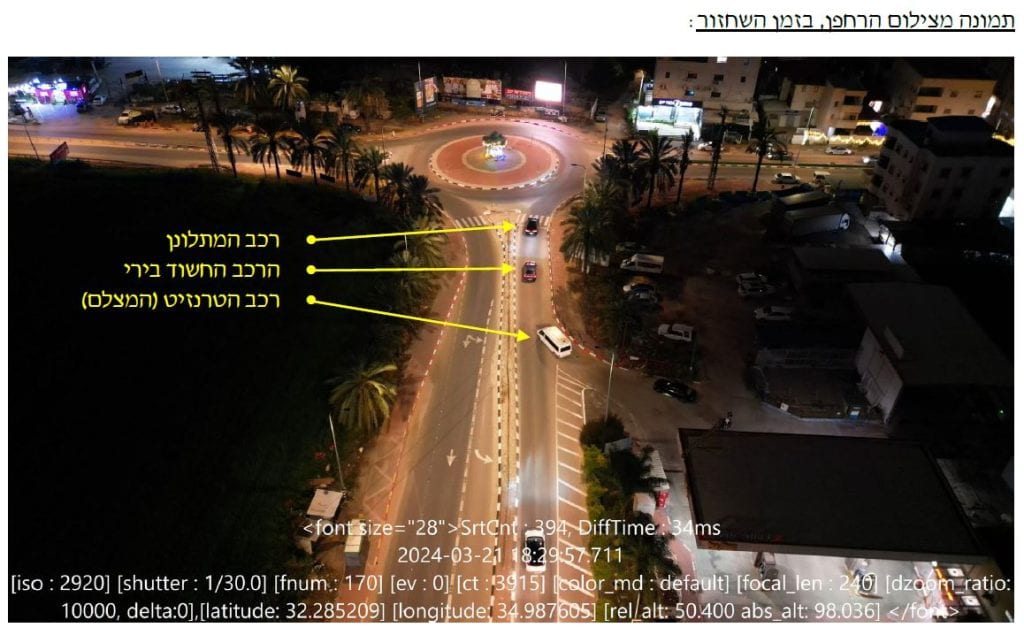
Attached are sample images from an expert opinion analysing a shooting case, including a photographed reconstruction combined with drone aerial photography.
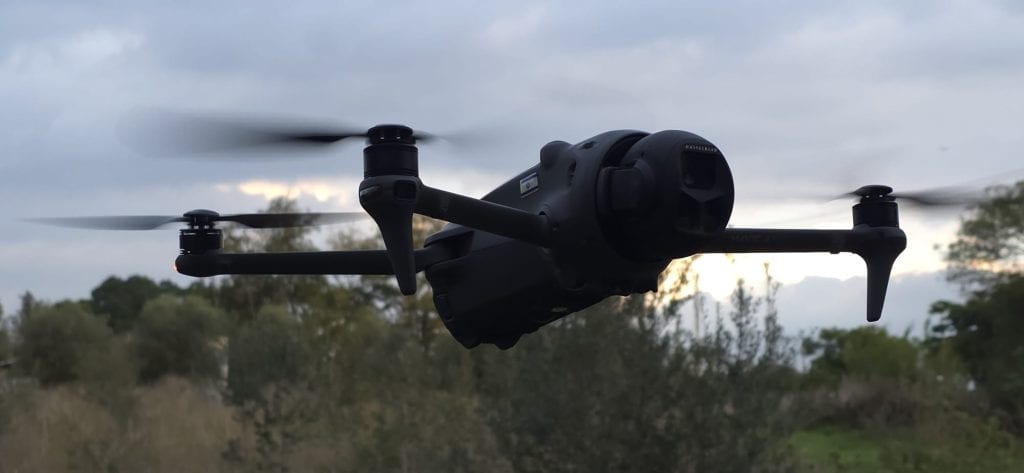
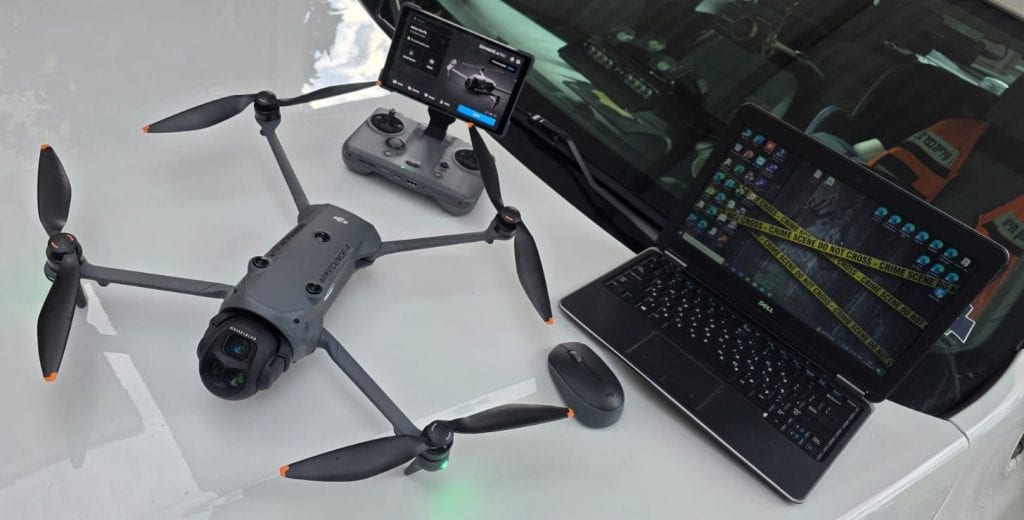
AVidence’s new acquisition: the DJI Mavic 4 Pro Creator drone.
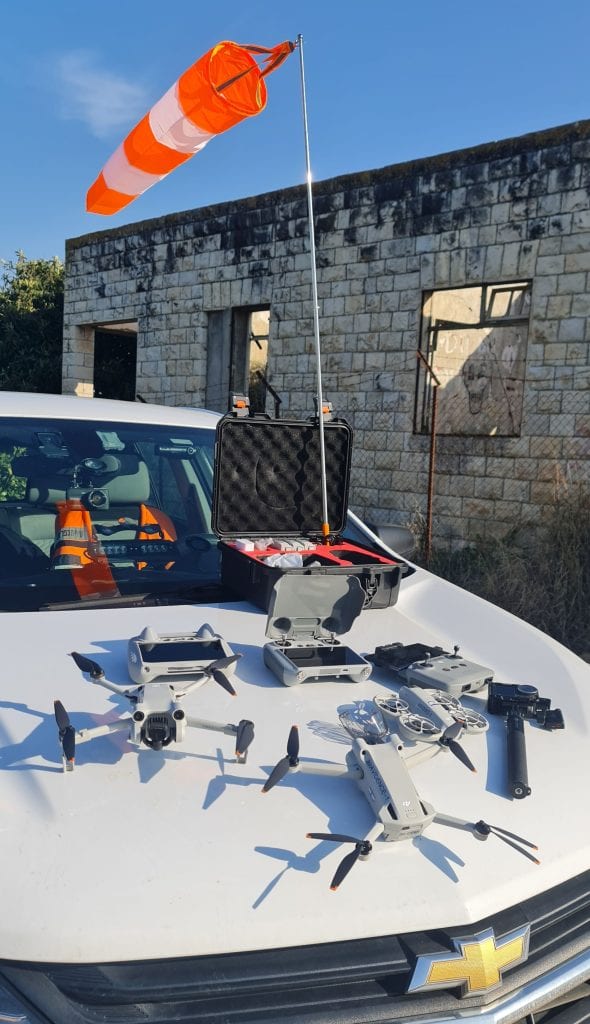
At AVidence we use both Mini Pro drones and the new Mavic 4 Pro Creator drone, given their technical specifications, which allow us to work at varied scenes.
The Mini Pro drones are excellent drones: small, smart and lightweight (only about 250 grams). They are ideal for shooting even in difficult lighting conditions and, because they are small, they are far less noticeable at the scene. They allow up to 47 minutes of continuous flight.
The Mini Pro drone delivers high, impressive image quality:
4K video and still images of up to 48MP (megapixels), combined with an F1.7 aperture, allow shooting in difficult lighting conditions.
The Mavic 4 Pro Creator drone is the advanced, latest-generation model. It has stabilisation, navigation and safety systems and is protected by an omnidirectional sensor system. This is critical for complex flights, built-up areas and precise reconstructions.
Despite its size and weight of almost 1.1 kg (which give it greater stability when shooting, even in windy conditions), it allows continuous flight time of up to 51 minutes.
The Mavic 4 Pro is equipped with a triple camera array, with each lens designed for a different task:
- Wide lens (Wide / Main Camera) – documentation, measurements, night photography
- Medium telephoto lens (Medium Tele) – isolating objects, details from a distance
- Long telephoto lens (Telephoto) – observation, remote documentation, safety
The Mavic 4 Pro Creator has a more advanced and more stable gimbal, suited to documenting scenes, damage and infrastructure, and to forensic analysis. It offers low-light performance significantly better than the entire Mini series, enabling advanced shooting in darkness and at night and producing high-resolution images. It shoots stills of up to ~48MP, with a significant advantage for AI upscaling (producing 100MP images), and video of up to 6K. These specifications make the Mavic 4 Pro a tool suited to professional productions, expert opinions and forensic reconstructions.
Ideal uses for drones:
✔ Expert opinions for the court
✔ Reconstruction of accident / shooting scenes
✔ Measurements and damage
✔ Engineering documentation
✔ Advanced night photography
Frequently asked questions
How is a photographed reconstruction of a scene carried out?
First, the scene is studied from all the materials in the case file: security cameras, police photographs, reports and testimony. Then we go out to the scene, carry out a reconstruction and document it with photography, recordings and aerial drone footage. The photographs are submitted as appendices to the expert opinion.
Why use a drone to document a scene or damage?
Aerial photography shows the layout of the scene, distances and positions that cannot be seen from the ground, and helps clarify points in dispute. The footage is shot by a pilot holding a commercial licence from the Civil Aviation Authority of Israel.
Are the photographs submitted to the court?
Yes. The photographs and videos are submitted as an integral part of the expert opinion, within the expert's work file.


