

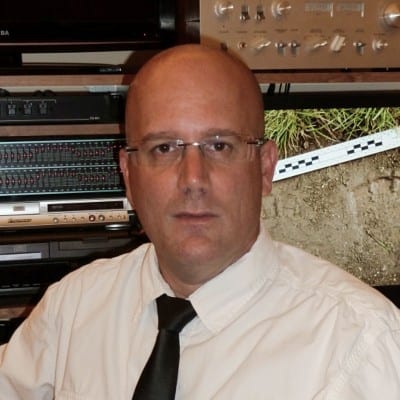

Doron Baldinger is an expert in enhancing recorded evidence, including improving audio quality and/or reducing noise in a recording or in recordings made in difficult conditions.
Over 20 years of experience.
Expert witness in the courts.
For an initial, no-obligation phone consultation, call 054-421-2424 or send a WhatsApp message. We would be glad to hear from you.
The purpose of enhancing a recording and reducing its noise is to bring recordings that are difficult to understand to a state in which they can be transcribed, putting into writing what was said in the conversation as accurately and completely as possible. This allows them to be accepted as authentic, high-quality evidence in legal proceedings, and allows the transcript, produced in the best possible way, to reflect faithfully and fully what was said, with a minimum of gaps and unclear passages.
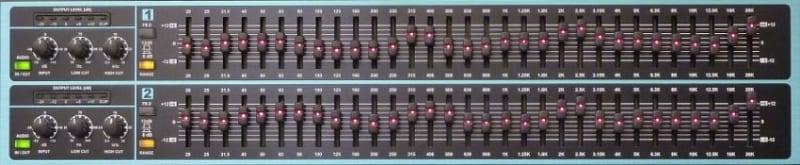
Recording enhancements are made both with dedicated studio equipment, which can improve recording quality even without computer processing, and with professional software for sound enhancement and noise reduction in more complex situations.
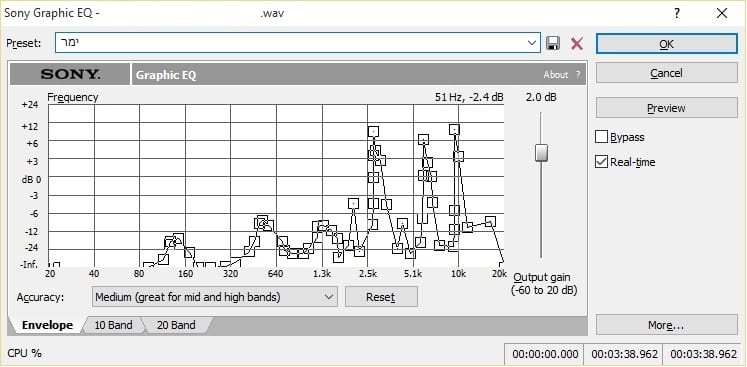
Computer-based noise reduction can bring the frequencies of the speakers’ voices to the fore and significantly attenuate the frequencies of background noise.
The same applies to conversations with significant differences in volume. These differences may result from differences in the loudness of the speakers’ voices, and/or from the quality of the recording device, and/or from the recording conditions in the field (for example, the position of the recording device and its distance from the participants in the conversation, such as when the person making the recording is close to the device and the recorded party is far from it). Sometimes it is even necessary to apply selective amplification to different segments of the recording, according to each of the speakers in the conversation.
The results of these enhancements are usually highly significant, making it possible to hear the content of what was said and to obtain a high-quality, accurate transcript of it.
In our studio, we have the appropriate equipment and many years of experience in enhancing and reducing noise in conversations recorded in difficult conditions, in order to improve the audibility of the speakers so that what was said can be understood.
Whether the recording was made in noisy places such as cafés, restaurants, a busy street, a moving car, or while the radio was playing in the background, and so on.
Whether the recording was made in places that suffer from sound reflections, such as stairwells, lobbies, a prison cell and the like, so that the recording suffers from severe echo.
Or where the recording was made covertly, with the recording device inside a pocket or bag, so that the sound of the recording is severely muffled.
Once the enhancement work is complete, we provide the client with a disc containing both the original recording (before enhancement) and the enhanced recording files. In addition, where required in legal proceedings, an accompanying document (an action report) can also be attached, setting out for the court all the work performed, in full transparency.
Beyond all of the above, we also carry out conversions between different recording formats (standard analogue cassettes, mini-cassette dictation tapes, various digital recordings, recordings from mobile phones, extraction of audio from video files and more).
We also transfer various recordings to suitable media so that they can be submitted as evidence in legal proceedings, in the required number of copies. In these cases, too, the true copies are accompanied by a document certifying the work performed and the method by which the true copy was produced.
We have advanced studio equipment for sound enhancement and, in extreme cases where computer-based enhancement is required, the options for building sound-enhancement filters are extremely broad.
Frequently asked questions
Can noise be removed from a recording so you can hear what was said?
Yes, in most cases. Computer-based noise reduction amplifies the frequencies of the speakers' voices and attenuates background noise. The result usually makes it possible to hear what was said and to transcribe it accurately.
What can be done when one of the speakers is far from the recording device?
Selective amplification is applied to each speaker's segments separately, so that the party who was far from the device can also be heard more clearly.
Is the original recording kept?
Yes. The client receives both the original recording and the enhanced recording, and where required in legal proceedings, a document describing the work performed can be attached.


